

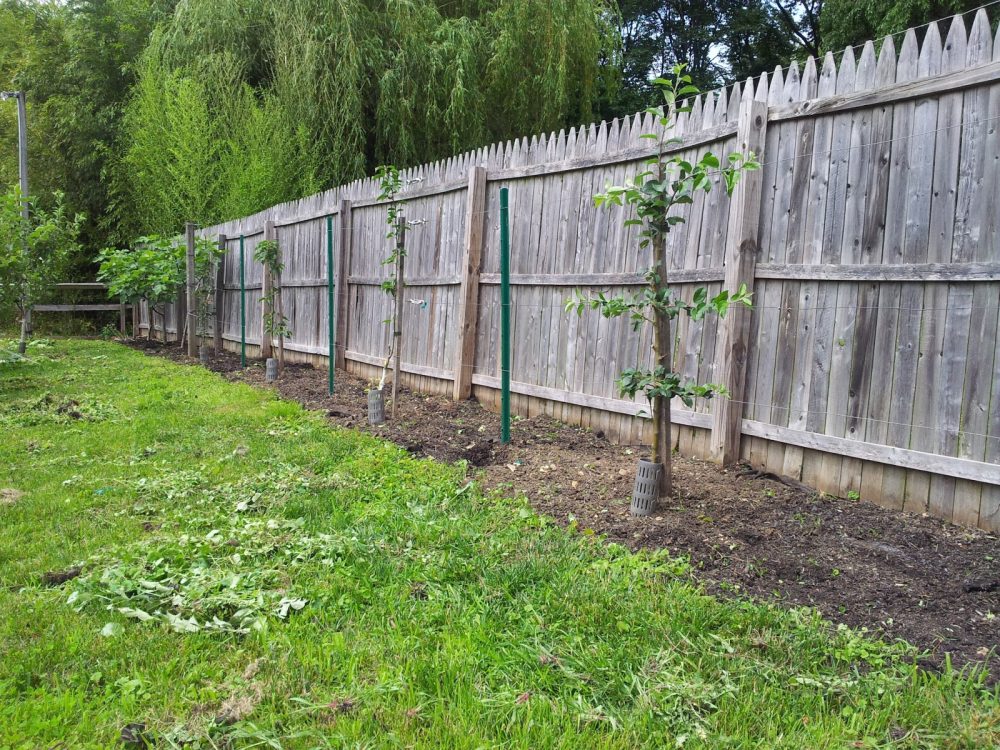
Espalier training involves shaping fruit trees into flat, two-dimensional forms against supports such as fences or walls. This technique maximises space in smaller gardens while enhancing productivity and aesthetics. For those with limited areas, espalier trees offer an efficient way to grow fruit without requiring extensive ground coverage. In the UK, where garden sizes vary and weather conditions can be unpredictable, selecting appropriate varieties ensures success. If you plan to buy fruit trees suited to this method, consider factors like rootstock, pollination needs, and site orientation early in the process.
A nursery specialist at CRJ FruitTrees provides this advice: “Espalier training demands consistent pruning to maintain structure, but it rewards with abundant harvests in confined spaces. Espalier apple trees perform exceptionally well on fences, provided they receive adequate sunlight and protection from strong winds.”
This article examines the top four espalier trees ideal for fences, focusing on their suitability for British climates. Each selection balances ease of training, fruit quality, and resilience.
Espalier Training
Espalier originates from medieval European gardens, where monks developed the method to cultivate fruit in enclosed spaces. The term derives from the French word for shoulder, reflecting the supportive framework used. In practice, espalier involves tying young branches to horizontal wires or trellises, encouraging lateral growth while restricting vertical expansion. Common patterns include horizontal cordons, where branches extend in tiers, and fan shapes, with arms radiating outwards.
For fences, espalier serves multiple purposes. It transforms plain boundaries into productive features, ideal for urban or suburban settings where space is at a premium. The flat profile allows air circulation, reducing disease risks, and facilitates easier harvesting. In the UK, with its temperate climate, espalier trees benefit from the warmth retained by fences, particularly south-facing ones made of brick or wood that absorb heat during the day.
To begin espalier, select young trees on dwarfing rootstocks, such as M9 for apples or Quince A for pears, which control vigour and promote fruiting over excessive growth. Training starts in the first year, with formative pruning in winter to establish the framework. Summer pruning then maintains shape and encourages spurs for fruit production. Tools required include secateurs, ties, and wires spaced 30-45 centimetres apart on the fence.
This method suits a range of fruit trees, but success depends on choosing varieties that respond well to restriction. Poor choices may lead to weak growth or sparse crops, so research compatibility before proceeding.
Benefits of Espalier Trees on Fences
Growing espalier trees against fences offers practical advantages for British gardeners. Space efficiency stands out, as the trees occupy minimal depth, often just 30-50 centimetres from the support. This makes them suitable for narrow gardens or allotments where traditional orchards are impractical.
Productivity increases due to better light exposure. In espalier forms, all branches receive sunlight evenly, leading to uniform ripening and higher yields per square metre compared to freestanding trees. For instance, a single espalier apple tree can produce 10-15 kilograms of fruit annually once mature.
Aesthetic appeal enhances garden design. The structured patterns create living artwork, blending functionality with ornamentation. In spring, blossoms provide visual interest, followed by colourful fruits in autumn. Fences become focal points, screening unsightly views while contributing to biodiversity by attracting pollinators.
Health benefits arise from improved management. Elevated branches simplify pest monitoring and spraying, if necessary, reducing chemical use. Good airflow minimises fungal issues common in damp UK weather, such as powdery mildew or scab.
Economically, espalier trees represent a long-term investment. Initial costs for supports and plants are offset by years of home-grown produce, cutting supermarket expenses. For those interested in sustainability, this approach aligns with organic gardening principles, promoting self-sufficiency.
However, challenges exist, including the need for regular maintenance. Neglect can result in tangled growth, so commitment is essential. Despite this, the rewards make espalier a worthwhile pursuit for dedicated gardeners.
Selecting the Right Espalier Tree for Your Fence
Choosing an espalier tree requires assessing site conditions. Aspect matters: south or west-facing fences provide optimal warmth and light, crucial for fruit ripening in the UK’s variable summers. Soil quality should be well-drained and fertile; amend clay or sandy grounds with compost to improve structure.
Rootstock selection influences size and vigour. Dwarfing types keep trees manageable, typically reaching 2-3 metres wide and 2 metres high when trained. Pollination compatibility is key; many fruit trees need partners, so plant groups or self-fertile varieties.
Climate resilience plays a role. Frost-hardy options suit northern regions, while disease-resistant strains reduce interventions. Consider fruit preferences: eating, cooking, or dual-purpose types.
When deciding to buy fruit trees for espalier, opt for nursery stock already partially trained to save time. Ensure the supplier offers guarantees on health and variety accuracy.
Top 1: Apple Trees
Apple trees rank highly for espalier on fences due to their adaptability and wide variety range. In Britain, apples have been cultivated since Roman times, with espalier techniques refining production in walled gardens. Modern varieties on M9 or M26 rootstocks thrive in this form, producing crisp fruits ideal for eating fresh or storing.
Popular choices include ‘Cox’s Orange Pippin’, renowned for its aromatic flavour, and ‘Braeburn’, which stores well into winter. ‘Discovery’ offers early crops, ripening in August, while ‘James Grieve’ provides juicy, dual-purpose apples. These respond excellently to training, forming neat tiers with minimal effort.
Planting involves spacing wires at 45-centimetre intervals on the fence, starting 50 centimetres from the ground. Dig a hole twice the rootball width, incorporating bone meal for establishment. Tie the central leader to a bamboo cane, then bend side branches horizontally.
Care includes annual winter pruning to remove crossing shoots and summer tipping to encourage fruit buds. Water regularly in dry spells, especially during fruit set, and mulch to retain moisture. Apples need full sun, at least six hours daily, to develop sweetness.
Pests like aphids and codling moth can affect crops, but netting and traps manage them effectively. Disease resistance varies; select scab-tolerant types for humid areas.
Yields build over years: expect a few fruits in year two, increasing to bountiful harvests by year five. The versatility of apples makes them a cornerstone for espalier enthusiasts, blending tradition with contemporary gardening.
Top 2: Pear Trees
Pears excel in espalier formats, offering elegant growth and succulent fruits. Native to temperate zones, pears suit the UK’s mild climate, with espalier enhancing their natural tendency for upright habits. Rootstocks like Quince A or C limit size, making them fence-friendly.
Recommended varieties encompass ‘Conference’, a reliable cropper with elongated fruits, and ‘Williams’ Bon Chrétien’, prized for its buttery texture. ‘Concorde’ bridges early and late seasons, while ‘Doyenné du Comice’ delivers gourmet quality. These trees train readily into fans or cordons, maximising space.
Installation requires sturdy supports, as pears can become heavy with fruit. Position against a sheltered fence to protect blossoms from late frosts. Soil preparation involves adding organic matter for fertility, planting in autumn for root development.
Maintenance focuses on thinning fruits to prevent branch strain and pruning in late winter to open the canopy. Summer pruning controls vigour, promoting spurs. Irrigation is vital in summer, as pears dislike drought.
Common issues include pear midge and fire blight; vigilant monitoring and hygiene prevent outbreaks. Resistant varieties minimise risks.
Harvests commence earlier than apples, often from August, providing seasonal variety. Pears’ subtle flavours complement espalier’s decorative appeal, making them a sophisticated choice for fences.
Top 3: Plum Trees
Plums bring vibrant colours and flavours to espalier setups on fences. Originating from Asia but long established in Britain, plums adapt well to training, with dwarfing rootstocks like Pixy or VVA-1 ensuring compactness. Their blossoms herald spring, adding ornamental value.
Key varieties feature ‘Victoria’, a prolific bearer with sweet fruits, and ‘Opal’, an early ripener. ‘Czar’ suits cooking, while ‘Marjorie’s Seedling’ extends the season into September. These form attractive fans, enhancing fence lines.
Setup entails wiring at 30-40 centimetre spacings, planting in well-drained soil to avoid root rot. Incorporate lime if acidity is high, as plums prefer neutral pH.
Pruning occurs post-harvest to shape and renew wood, with minimal summer intervention to avoid silver leaf disease. Support heavy crops with props if needed.
Pests such as plum moth require pheromone traps, and wasps can be deterred with bags over fruits. Fungal problems like brown rot demand good ventilation. Productivity peaks in warm summers, yielding jams and desserts. Plums’ robustness makes them forgiving for beginners in espalier.
Top 4: Cherry Trees
Cherries provide a luxurious option for espalier on fences, with sweet or sour types available. In the UK, cherries face bird predation, but training facilitates netting. Gisela 5 rootstock dwarfs trees, fitting small spaces.
Favourites include ‘Stella’, self-fertile and sweet, and ‘Morello’ for cooking. ‘Sunburst’ offers large fruits, while ‘Lapins’ resists cracking. Fan training suits cherries, spreading branches for even ripening. Plant against sunny fences, enriching soil with potassium for fruit quality. Autumn planting allows settlement before growth. Care involves pruning immediately after fruiting to minimise gumming, and watering during dry periods. Thin clusters for larger berries. Birds pose the main threat; nets are essential. Bacterial canker requires clean tools and wound paint. Crops in June-July deliver fresh eating delights. Cherries elevate espalier to gourmet levels.
Planting Guide for Espalier Trees
Successful espalier begins with proper planting. Choose a fence at least 2 metres high, reinforcing if wooden to bear weight. Install galvanised wires tautly, using eye bolts for tension. Select healthy, one-year-old trees, soaking roots before planting. Dig trenches 60 centimetres deep, mixing in compost and fertiliser. Position the union above soil level, staking initially. Backfill firmly, watering thoroughly to eliminate air pockets. Mulch with bark to suppress weeds and conserve moisture. Timing favours dormant seasons, November to March, avoiding frozen ground. Monitor for settlement, adjusting ties as needed.
Maintenance and Pruning Techniques
Ongoing care sustains espalier health. Prune deciduous trees in winter for structure and summer for control. Remove vertical shoots, tying horizontals. Fertilise in spring with balanced feeds, supplementing potassium for fruit. Water weekly in establishment, reducing once rooted. Inspect for ties cutting bark, loosening as trees thicken. Renew mulch annually. Advanced techniques include bending supple branches gradually, using weights if stubborn.
Common Problems and Solutions
Espalier trees encounter issues like poor fruit set from inadequate pollination; plant companions or use brushes for transfer. Diseases such as apple scab require resistant varieties and fungicides. Pests including aphids respond to soaps or predators. Structural failures from wind demand secure fixings. Nutrient deficiencies show in leaves; test soil and amend. Vigilance ensures longevity, with trees lasting 20-30 years.
Conclusion
Espalier trees transform fences into fruitful assets. The top four—apples, pears, plums, and cherries—offer diversity for British gardens. With careful selection and maintenance, they provide bountiful returns. For those ready to buy fruit trees, this method combines efficiency and elegance.

Comments are closed.