

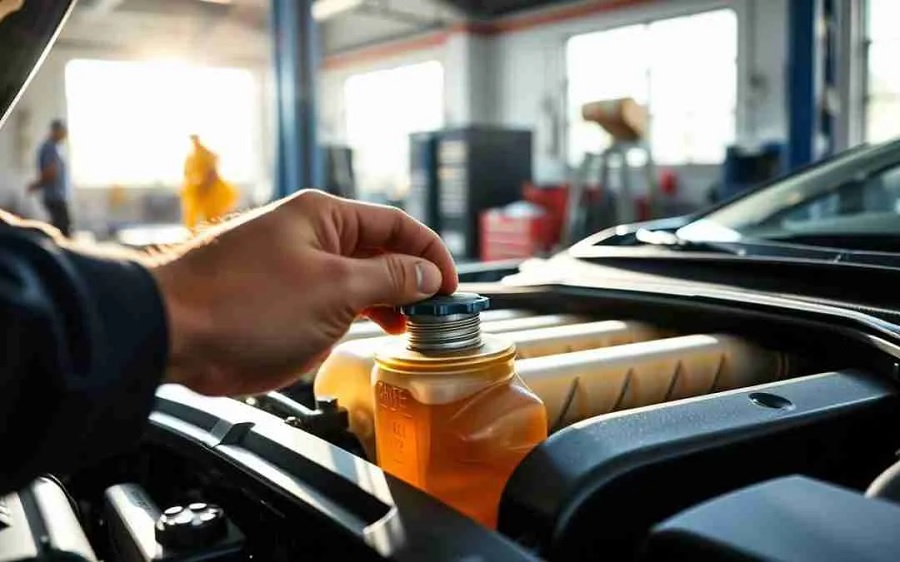
Most drivers are conditioned to obsess over engine oil. We diligently check the dipstick, debate the merits of synthetic versus conventional blends, and schedule regular changes to keep our engines running smoothly. Yet, right next to that finely lubricated engine block is a complex thermal management system that is routinely ignored until a dashboard light flashes red or steam billows from under the hood. The liquid keeping your engine from melting down is automotive coolant, and it requires just as much strategic maintenance as your motor oil.
Ignoring your coolant flush intervals does not merely result in a slight dip in performance or a marginally warmer cabin. Over time, neglected coolant undergoes a chemical transformation that turns a protective fluid into a highly destructive agent. When left in the system too long, degraded coolant leads directly to severe mechanical failures, most notably water pump destruction and a silent, aggressive phenomenon known as cooling system electrolysis.
To protect your vehicle from catastrophic engine damage, it is critical to understand exactly what happens to coolant as it ages, how it interacts with the metals in your engine, and why adhering to strict flush intervals is non-negotiable.
What Exactly is Engine Coolant Doing?
To understand why coolant degrades, you have to understand its multifaceted job. Coolant, typically a 50/50 mixture of antifreeze (ethylene glycol or propylene glycol) and distilled water, does much more than raise the boiling point and lower the freezing point of the liquid in your radiator.
Modern engine blocks, cylinder heads, radiators, and heater cores are constructed from a diverse mix of metals, including cast iron, aluminum, brass, and copper. When these dissimilar metals are submerged in a liquid, they are naturally prone to galvanic corrosion. To combat this, antifreeze manufacturers blend in a highly specific additive package. These chemical inhibitors are designed to coat the internal metal surfaces, preventing rust, scale build-up, and corrosion.
Additionally, coolant acts as a vital hydraulic lubricant. The water pump, which continuously circulates the fluid through the engine block and radiator, relies on the chemical properties of the coolant to keep its internal mechanical seals pliable and its bearings spinning freely.
The Silent Killer: Understanding Cooling System Electrolysis
The most severe consequence of stretching your coolant flush intervals is a chemical and electrical reaction known as electrolysis. Electrolysis occurs when your engine coolant loses its protective properties and essentially becomes an electrically conductive fluid—an electrolyte.
As the corrosion inhibitors in the coolant break down over thousands of miles and countless heat cycles, the pH level of the fluid changes. It often becomes highly acidic. When this acidic fluid flows through an engine constructed of dissimilar metals, it creates a weak battery. A small electrical charge begins to pass through the liquid.
This condition is often exacerbated by poor electrical grounds within the vehicle. If the engine block, alternator, or starter is not properly grounded to the chassis, stray electrical current will seek the path of least resistance to complete its circuit. Often, that path is straight through the increasingly conductive engine coolant.
How Electrolysis Destroys Aluminum Components
When electrical current flows through the coolant, it actively strips metal atoms from the internal surfaces of the cooling system in a process called anodic dissolution. Aluminum components are particularly vulnerable to this attack.
Electrolysis literally eats away at the metal from the inside out. It causes microscopic pitting that eventually turns into pinhole leaks in the radiator, the timing cover, or the heater core hidden deep beneath the dashboard. Because the damage happens internally, there are often no warning signs until a catastrophic failure occurs. A driver might notice a sudden, unexplained loss of coolant, or discover a puddle of sweet-smelling fluid inside the passenger footwell, indicating a ruptured heater core. Replacing a heater core requires dismantling the entire dashboard, turning a preventable maintenance oversight into an incredibly expensive repair bill.
How Degraded Coolant Destroys Water Pumps
While electrolysis attacks the stationary metals in your cooling system, neglected coolant poses a different but equally fatal threat to moving parts, primarily the water pump.
The water pump is the beating heart of the cooling system. Driven by the engine’s serpentine belt or timing belt, its impeller blades aggressively push coolant through tight engine passages. To prevent coolant from leaking out of the pump housing while the shaft spins at thousands of revolutions per minute, the pump utilizes a specialized mechanical seal.
The Breakdown of Lubrication
When coolant is fresh, its additive package provides crucial lubrication to this mechanical seal. As the coolant ages past its intended lifespan, those lubricating additives deplete. Furthermore, the fluid often becomes contaminated with microscopic particles of rust, scale, and degraded rubber from aging radiator hoses.
This abrasive, acidic, unlubricated mixture acts like liquid sandpaper against the water pump seal. The seal eventually scores and fails, allowing coolant to push past it and contaminate the water pump bearings. Once the bearings are washed of their protective grease, they begin to grind and overheat. You may hear a low rumbling or whining noise from the front of the engine, or notice fluid dripping from the water pump’s designated “weep hole”—a deliberate manufacturing feature designed to indicate seal failure.
The Danger of Dropped-Out Silicates
In older Inorganic Additive Technology (IAT) coolants, silicates were used heavily to protect aluminum parts. If IAT coolant is left in the system too long, these silicates can “drop out” of suspension. They clump together and form a gel-like abrasive sludge. This abrasive sludge acts as a grinding paste on the water pump impeller blades. Over time, the blades can erode entirely, leaving the pump spinning aimlessly without actually moving any fluid. The engine will rapidly overheat, potentially warping the cylinder head or blowing a head gasket.
Determining the Right Coolant Flush Interval
The automotive industry has evolved significantly from the days when every car required a flush every 30,000 miles or two years. Today, determining the correct interval requires understanding exactly what type of coolant your vehicle uses.
-
Inorganic Additive Technology (IAT): Typically green in color, this is the classic coolant used in older vehicles. The silicates and phosphates in IAT deplete rapidly, making a strict 30,000-mile or 2-year interval mandatory.
-
Organic Acid Technology (OAT): Often orange, pink, or red, OAT coolants are widely used in modern domestic and Asian vehicles. They do not contain silicates or phosphates. Instead, they use organic acids to protect metal surfaces. Because these acids deplete much slower, OAT coolants often boast a lifespan of 100,000 to 150,000 miles, or 5 years.
-
Hybrid Organic Acid Technology (HOAT): Usually yellow or gold, this combines the fast-acting protection of IAT with the long-lasting stability of OAT. It is common in European and some domestic vehicles, generally requiring a flush every 75,000 to 100,000 miles, or 5 years.
Regardless of the advertised lifespan on a jug of antifreeze, the owner’s manual is the ultimate authority. Driving conditions also play a massive role. Vehicles subjected to extreme towing, relentless stop-and-go city traffic, or harsh environmental temperature swings will experience faster additive depletion and require more frequent servicing.
The Difference Between a Drain-and-Fill and a Proper Flush
When it is time to service the cooling system, many owners and even some quick-lube shops simply open the petcock valve at the bottom of the radiator, let whatever fluid is in there drain out, and refill the top. This is known as a drain-and-fill, and it is largely inadequate for a severely degraded system.
A standard radiator only holds about 40 to 50 percent of the total coolant capacity. The rest remains trapped inside the engine block, the heater core, and the connecting hoses. If your coolant has become highly acidic and is actively causing electrolysis, a simple drain-and-fill leaves half of that destructive acid behind to immediately contaminate the fresh fluid you just poured in.
A proper coolant flush requires pushing pressurized water or a specialized cleaning solvent through the entire system. This process physically dislodges calcified scale, flushes out the heater core, and pushes the old fluid out of the deep water jackets within the engine block. Only after the fluid runs completely clear should the system be refilled with the proper 50/50 mixture of fresh antifreeze and distilled water.
Testing Your Coolant at Home
You do not have to wait for a specific mileage interval to know if your coolant is failing. You can proactively test the health of your cooling system with a few simple tools.
First, use automotive coolant test strips. By dipping a strip into the radiator fluid, you can immediately check the pH level and the freeze point. If the pH has dropped into the highly acidic range, the fluid must be flushed immediately, regardless of the mileage.
Second, you can test for electrolysis using a standard digital multimeter. By placing the negative probe on the negative battery terminal and suspending the positive probe directly into the coolant (without touching the metal radiator housing), you can read the voltage passing through the fluid. A reading above 0.3 volts indicates that electrolysis is actively occurring and is slowly destroying your engine internals from the inside out. Check your engine grounds and flush the system completely.
Conclusion
Automotive maintenance is a game of risk management. Engine oil and brake pads are incredibly visible maintenance items, but the fluid quietly managing the immense heat of combustion requires identical vigilance.
Coolant does not last forever. As its chemical structure breaks down, it transforms from a necessary protector into a destructive force, weaponizing stray voltage to eat away at aluminum components and grinding down the mechanical seals of your water pump. By testing your fluid regularly, adhering to the manufacturer’s specific intervals, and ensuring you are performing a comprehensive flush rather than a lazy drain-and-fill, you can prevent thousands of dollars in catastrophic engine repairs. Proactive cooling system maintenance is arguably the highest return on investment in the automotive world. Keep it clean, keep it fresh, and your engine will reward you with years of reliable service.
