

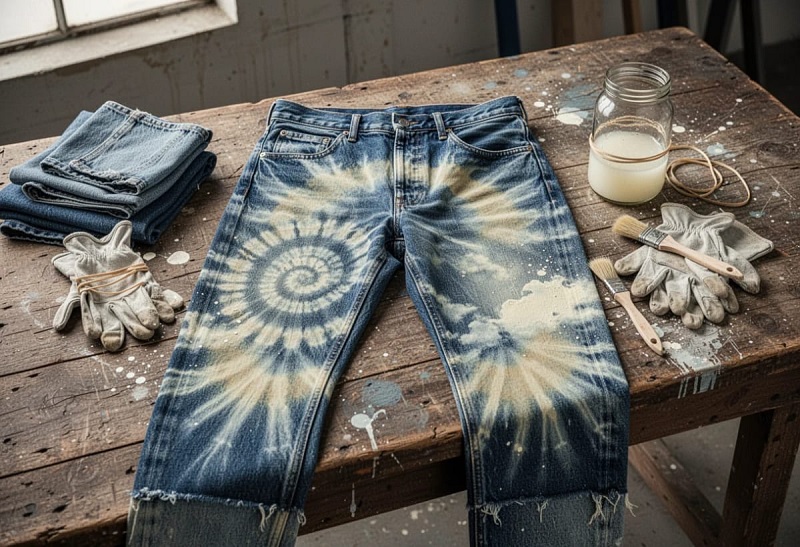
Stepping into a brand-new pair of raw denim jeans often feels like trying to wear a suit of armor crafted from heavy-duty cardboard. The unyielding fabric fights your every movement, the waist pinches uncomfortably, and simply bending your knees requires a conscious, calculated physical effort. Yet, denim purists, heritage menswear enthusiasts, and style aficionados willingly subject themselves to this initial discomfort for a very specific, highly coveted payoff. The ultimate goal is a pair of jeans that will eventually mold perfectly to the wearer’s exact body shape and develop highly personalized wear patterns, commonly known in the community as fades.
However, the journey from stiff, industrial cotton to a customized second skin comes with a notorious and frustrating hazard. The dark, rich indigo dye that makes raw denim so visually appealing is incredibly unstable in its early stages of wear. If you are not careful, that beautiful blue will transfer onto your light-colored sneakers, your car seats, and worst of all, your expensive living room upholstery. Successfully breaking in raw denim requires a strategic approach to soften the rigid fabric while meticulously managing the inevitable dye bleed.
Understanding the Beast: What Exactly is Raw Denim?
To understand how to manage the fabric, you must first understand how it is made. Most jeans purchased off the rack today have been subjected to extensive industrial washing, stone-washing, distressing, and chemical treatments before they ever reach a retail shelf. These aggressive manufacturing processes artificially soften the fabric, create simulated fade marks, and wash away massive amounts of excess dye. Raw denim, conversely, skips this final washing phase entirely. It is taken straight from the loom, cut, sewn, and sold in its purest, most unadulterated form.
Because it remains untouched by industrial washing machines, raw denim retains all the stiffening starches applied to the cotton yarns during the weaving process. More importantly, it holds a massive amount of unsecured indigo dye. Traditional premium denim is created using a technique called rope dyeing, where the heavy cotton yarns are dipped repeatedly into massive vats of liquid indigo. Because the dye only coats the outer layers of the yarn and does not penetrate all the way to the core, the color naturally chips away through friction over time, revealing the white cotton underneath. This surface-level dye is precisely what creates stunning high-contrast fade patterns, but it is also exactly why a new pair of raw jeans will leave a blue footprint on almost anything they touch.
The Cardinal Rule of Indigo: Understanding Crocking
In the textile industry, the transfer of dye from one fabric to another through friction is known as crocking. When dealing with raw denim, crocking is not a manufacturing defect or a sign of cheap material; it is an inherent, unavoidable characteristic of the garment.
Crocking occurs in two distinct forms: dry and wet. Dry crocking happens when you sit on a light-colored fabric sofa and the sheer mechanical friction of your movement rubs the loose indigo dust onto the upholstery. Wet crocking, however, is exponentially more severe. If you get caught in a sudden rainstorm, or if you sweat heavily on a hot afternoon, the moisture acts as a potent solvent for the indigo. Wet raw denim will bleed aggressively, instantly and permanently staining light leather car seats, suede boots, and fabric furniture. Acknowledging that crocking will happen is the very first step in mitigating the collateral damage.
Pre-Wear Strategies to Minimize Dye Transfer
Before you even attempt to wear your new rigid jeans out in public, you can take preventative measures at home to strip away the most volatile layers of loose dye and soften the aggressive starches.
The Initial Soak
The single most effective way to tame a new pair of raw denim and significantly reduce immediate crocking is a preliminary lukewarm soak. While absolute purists sometimes argue against any contact with water for the first six months, a quick, strategic soak removes the heavy surface starches and bleeds out the most unstable indigo without ruining the potential for future high-contrast fades.
Fill a clean bathtub with lukewarm water. Turn the jeans completely inside out to protect the outer surface from uneven abrasion against the tub, and fully submerge them for about forty-five minutes. You will quickly notice the water turning a deep, murky shade of blue or yellow-green. This is the excess dye and industrial starch that would have otherwise ended up heavily layered on your furniture. After the soak, roll them in a dark towel to remove excess water, then hang them to dry in a well-ventilated area. Always place a dark towel underneath the drying jeans to catch any rogue blue drips.
The Vinegar Trick
A long-standing, heavily debated technique within the denim community involves adding a cup of plain white vinegar to the initial soak water. Vinegar acts as a mild mordant, which is a chemical substance used in textile manufacturing to set dyes in fabrics. While it will not completely halt crocking—nothing truly will—the acetic acid in the vinegar helps bind some of the loose indigo molecules to the cotton fibers, slightly reducing the severity of the bleed during those critical first few weeks of wear.
How to Break in Stiff Denim Effectively
Once the jeans are completely dry from their initial soak, they will likely still feel incredibly stiff. Breaking them in from this point requires patience, daily commitment, and mechanical friction.
The Wear-at-Home Phase
The safest environment for a new pair of heavily bleeding jeans is your own home, provided you take a few basic precautions. Wear them around the house for a few hours each evening after work. Focus heavily on movements that naturally bend and crease the fabric at your joints. Walking up and down stairs, doing deep squats, lunging, or simply sitting cross-legged on a dark-colored rug will force the rigid denim to fold in the specific areas that perfectly align with your anatomy. These initial, deeply set creases, known as whiskers at the front of the hips and honeycombs behind the knees, form the architectural foundation of your custom fades.
The Damp Wear Method
If you have purchased exceptionally heavyweight denim—usually classified as anything over sixteen ounces per square yard—and it is causing physical pain behind the knees or intense bruising at the waist, you can utilize the damp wear method. Take a standard household spray bottle filled with clean tap water and lightly mist the interior of the jeans at the major friction points. Target the backs of the knees, the front of the hips, and the rigid waistband. The slight moisture temporarily weakens the bonds of the remaining starches, allowing the heavy fabric to mold more easily to your body as you move. Do not soak the jeans entirely during this phase; you only want them slightly damp to encourage localized flexibility.
Protecting Your World from Indigo Bleed
While you are working hard to break the jeans in and soften the cotton, you must actively protect your surrounding environment from the lingering dye transfer.
Furniture and Upholstery Defense
For the first month of consistent wear, you must operate under the mental assumption that your jeans are covered in a thin layer of wet blue paint. Completely avoid sitting on white couches, beige dining chairs, or light-colored leather car seats. If you must sit on a vulnerable surface, purposefully lay down a dark, thick towel first. Office chairs are particularly susceptible to indigo transfer because you shift your weight frequently while working, grinding the dye into the fabric. Bringing a dark seat cushion or a dedicated denim blanket to your office can save you from a highly awkward conversation and a costly commercial upholstery cleaning bill.
Footwear Considerations
Raw denim and pristine, minimalist white sneakers are a visually striking style combination, but it is a highly risky pairing during the break-in phase. The stiff hem of the jeans will constantly rub against the collar, tongue, and laces of your shoes as you walk, resulting in heavy, permanent blue staining. For the first few weeks, opt for dark leather boots, dark canvas sneakers, or older shoes you do not mind sacrificing to the indigo bleed. If you absolutely insist on wearing light-colored shoes, cuff the jeans highly enough so that the hem clears the top of the shoe completely, eliminating all physical friction between the denim and the footwear.
Washing and Maintenance: The Long Game
The heavy crocking phase is temporary. As the loose surface dye continually rubs off and the heavy cotton softens, the color transfer will gradually diminish until it is barely noticeable. Eventually, however, you will need to actually wash your jeans.
The prevailing myth online is that you must wait six months to a full year before washing raw denim under any circumstances. In reality, you should wash them when they are genuinely dirty or when they begin to hold an unpleasant odor. Waiting too long allows microscopic dirt, sweat, and natural body oils to embed deep within the cotton fibers. This abrasive grit actively degrades the fabric from the inside out, leading to premature blowouts in the crotch and holes in the knees.
When it is finally time for a proper, hygienic wash, always turn the jeans inside out. Use a specialized dark detergent formulated specifically to prevent color loss, and wash them alone on the most delicate, cold-water cycle your washing machine offers. Never put raw denim in a mechanical dryer. The intense, tumbling heat will shrink the fabric unpredictably, warp the leather patch on the waistband, and completely ruin the specific three-dimensional creases you spent months painstakingly establishing. Hang them by the belt loops in the shower or outside in the shade, and let them air dry naturally.
Breaking in raw denim is an exercise in patience and delayed gratification. It requires a willingness to endure initial stiffness and a vigilant awareness of where you sit and what you brush against. However, by utilizing strategic soaking, mechanical break-in techniques, and simple protective measures against crocking, you can successfully navigate the awkward early phases. The reward at the end of the process is a remarkably durable garment that fits better than anything else in your wardrobe, uniquely branded with the beautiful visual history of your everyday life.
